
Facility Portal: Vital Link Between Medical Transportation, Healthcare Facilities, and Health Plans
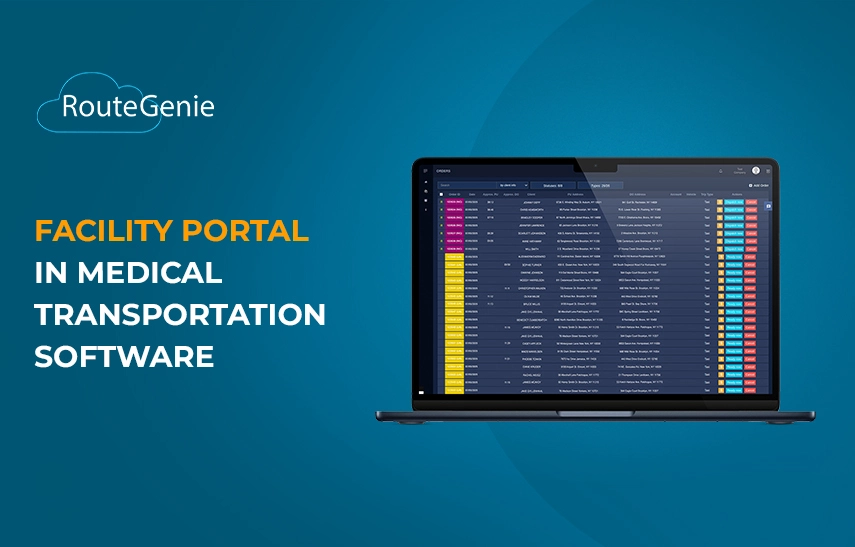
The familiar sight of inconspicuous vans taking passengers to and from medical appointments conceals a complex multi-party chain of stakeholders in medical transportation. Unfortunately, this chain frequently breaks due to miscommunication and information silos. NEMT software that gives access to all of the participants can resolve this problem.
Contents:
- Miscommunication and Its Danger to the Healthcare Industry
- What Is a Facility Portal in Medical Transportation?
- Critical Benefits for Medical Transportation Stakeholders
- Integration Is the New Standard
Miscommunication and Its Danger to the Healthcare Industry
A large portion of the medical industry still relies on faxes and phone tag. But even those facilities, health plans, and transport providers who have transitioned beyond the "manual era" might still be using non-integrated systems. This usually results in mis- or non-communication: the facility is not ready for the incoming passengers, rides are requested for unready patients, and discharge desks have no ETA. This fragmentation contributes to inefficiencies and medical transportation becoming a major barrier to healthcare access and an uncoordinated financial burden on the system.
In this environment, transportation cannot be treated as a side note. Facilities and health plans can become more involved in controlling this aspect of care without increasing the workload on their staff. They need one ecosystem where scheduling, patient status, and communication live in the same place. A facility portal that comes as an integral part of medical transportation software is the solution.
What Is a Facility Portal in Medical Transportation?
A facility portal is a module within a broader ecosystem of the medical transportation software platform that offers a secure workspace for the facility staff. It is an online booking platform that allows facilities and health plans to request, monitor, and manage rides without going the traditional long communication route. In essence, it connects the facility to the transportation provider, passenger, and broker inside one self-serving platform with a shared workflow.
In practice, a facility portal delivers these core functions.
- Online Booking and Trip Management
Facility staff can instantly get rate quotes, book, edit, and cancel rides directly, with structured fields that prevent missing details. That includes passenger information, pickup and drop-off location specificity, appointment times, mobility requirements, escort needs, and additional services when relevant.
- Trip Visibility with Real-time Tracking
Facilities need live status and ETA visibility, not a generic “assigned” label. A portal shows stages such as dispatched, en route, arrived, loaded, in transit, and complete. It provides real-time location, estimated pickup and drop-off times of the passenger with real-time GPS tracking and map-based context. With this information, the staff can effectively stage patients and coordinate handoffs.
- Integrated Communication and Notifications
A facility portal replaces phone tag with trip-based messaging, a live chat with a transportation provider, and standardized status updates. Communication stays tied to the trip record, so every party sees the same facts and timestamps. Additionally, the passenger receives trip notifications and is likely not to miss the pickup time.
- Data Analytics
This is the difference between transportation as a series of calls and transportation as an auditable, closed-loop workflow. The facility can access detailed performance reports to analyze the provider’s performance, check no-show data, and make data-driven decisions about the transportation side of the business.
Critical Benefits for Medical Transportation Stakeholders
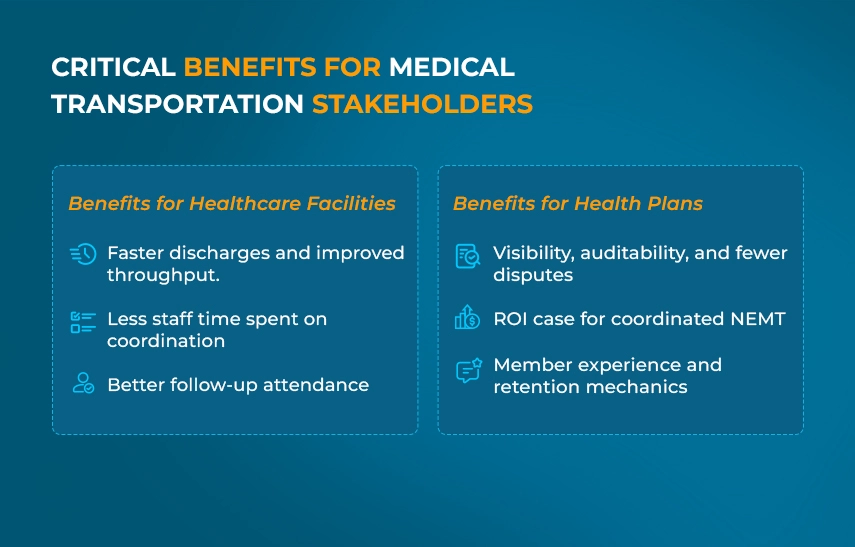 The self-service portal has clear benefits for all parties involved in the medical transportation workflow. Here are some examples of how stakeholders can benefit from implementing a software solution with this functionality.
Advantages for healthcare facilities
Faster discharges and improved throughput.
Discharge is a throughput problem with financial consequences. When a ride is uncertain, discharge desks hold beds longer, nurses spend time on logistics, and patients wait in lobbies. The average cost of a hospital bed day in the U.S. is approximately $2,883.
A non-emergency medical transportation provider from Michigan, Ride YourWay, has reported that after implementing RouteGenie software, they slashed discharge wait times from a 4–8 hour window to on-demand execution. This effectively saves thousands of dollars via reclaimed bed capacity and operational overhead.
Less staff time spent on coordination.
A portal enables facilities to shift from reactive calling to self-service visibility. Instead of calling for an ETA, the ETA is visible. Instead of repeating pickup instructions, they are stored with the trip. Instead of chasing confirmations, staff see arrival status in the same interface where they placed the request.
Better follow-up attendance.
Physicians face their most significant legal vulnerabilities when patients miss appointments or fail to receive necessary follow-up care. Transportation is one of the simplest points of failure that can be reinforced in this process.
Critical benefits for health plans
Visibility, auditability, and fewer disputes
Health plans need more than “trip completed.” They need to know what happened when a ride failed, why a patient waited, and whether the service matched the authorized level. A facility portal paired with a transportation platform creates a stronger audit trail: time-stamped status changes, documented exceptions, and consistent trip records.
ROI case for coordinated NEMT
Health plans invest in transportation because the alternative is often higher-cost care. The Medical Transportation Access Coalition (MTAC) surveyed 1,000 beneficiaries and discovered that 58% of them would not be able to attend medical appointments without NEMT. These missed appointments are a major financial burden on the healthcare system, which is estimated in billions.
Member experience and retention mechanics
 Real-time updates, fewer delays, and fewer failed pickups matter in member retention because they shape a member’s day, not just a claims line item. A patient who waits for hours after being told they can go home does not separate “transportation” from “the healthcare system.” They experience it as one system that does not communicate.
Integration Is the New Standard
The scale and complexity of medical transportation are rising. In that environment, manual coordination is not just inefficient. It increases operational risk. Health plans and healthcare facilities that leverage the power of self-service portals can significantly improve the efficiency of their operations and improve customer satisfaction.
RouteGenie’s facility portal is designed for that reality. It gives facilities a direct line into scheduling and live trip status. It gives transportation teams cleaner intake, faster readiness signals, and fewer avoidable exceptions. It gives health plans a clearer operational picture, with better documentation and fewer blind spots. When everyone works from the same trip record, the patient is less likely to get lost in the handoff.
Faciity Portal Q&A
What is a facility portal in medical transportation?
A facility portal in medical transportation is a secure, online booking and monitoring platform for healthcare providers (hospitals, clinics, nursing homes) to manage patient transport. It allows users to schedule, monitor, and track non-emergency medical rides (NEMT) in real-time, eliminating phone calls, streamlining requests, verifying eligibility, and improving transparency.
Is facility portal in medical transportation only for online booking?
No, a facility portal in medical transportation is not solely for online booking. It is a comprehensive online application designed to give medical facilities a command center for managing all aspects of their patients' non-emergency medical transportation (NEMT).
How effective is a facility portal?
Ride YourWay has reported that via the implementation of RouteGenie's Facility Portal, they cut discharge time from 4-8 hours to essentially on demand.
About the author


As RouteGenie's Marketing Director, Yurii gained deep knowledge in the NEMT industry. He is an expert in marketing, leveraging all channels to build RouteGenie's brand and ensure NEMT providers have access to powerful NEMT software that can boost their growth. Yurii shares his knowledge by writing content on marketing and healthcare topics, including medical transportation, home care, and medical billing.