
How to Use AI in Medical Transportation: Top 5 Use Cases w/Prompts
AI adoption is rapidly accelerating across all industries, and medical transportation is no exception. NEMT workflows are text-heavy, rules-based, and repetitive. These characteristics create a perfect environment for introducing artificial intelligence tools to reduce drafting time, enforce consistency, and accelerate processes without touching safety-critical or regulated decision-making.
We will cover the basics of modern AI platforms and show you the best ways to use AI in your medical transportation business.
Contents:
- Understanding Modern AI Tools
- How to Effectively Use AI in Medical Transportation
- Use Case 1: Documentation and Compliance Assistance
- Use Case 2: NEMT Marketing Strategy and Marketing Materials Generation
- Use Case 3: HR and Staff Training
- Use Case 4: Business Analysis and Performance Review
- Use Case 5: AI-Powered IVR (Interactive Voice Response) and Chat Bots
- Be Ready to Embrace the AI Era
Understanding Modern AI Tools
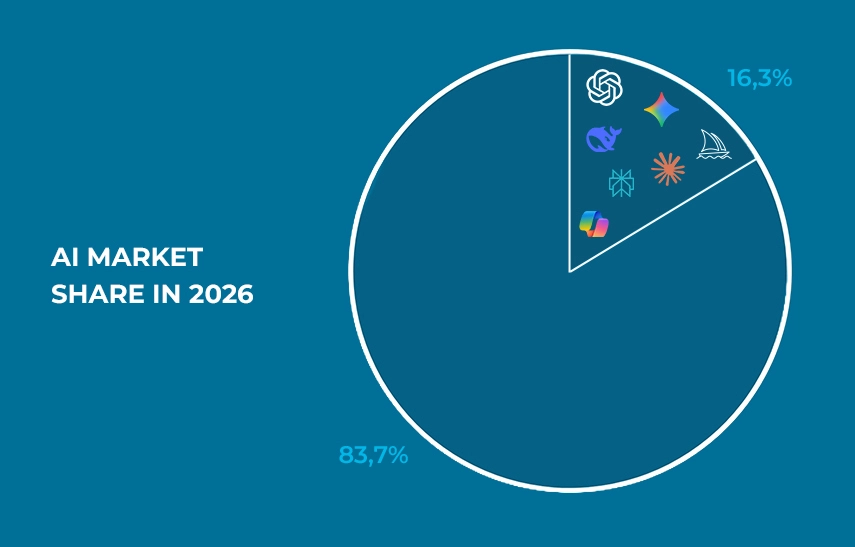 When people mention AI today, they're usually referring to generative AI tools. These include conversational large language models (LLMs) like ChatGPT and Claude, as well as tools that generate images, audio, and video. Unlike traditional software with fixed menus and buttons, these systems respond to natural language instructions and generate text, visual, audio, or other multimedia outputs.
Here are the most widely used platforms: ChatGPT (OpenAI), Gemini (Google), Copilot (Microsoft), Claude (Anthropic), Grok (X), Perplexity, Deepseek, and Midjourney AI. These are not some niche tools. Microsoft estimates that global usage of generative AI tools has already reached roughly 16.3% of the world’s population, meaning about one in six people use AI to learn, work, or solve problems. By the end of 2025, ChatGPT alone achieved 800 million weekly active users, breaking into the top 5 most visited web resources.
While these conversational AIs differ slightly in performance and safeguards, they all operate on the same principle: when a user provides clear input, the model is expected to produce useful output; vague instructions lead to incomplete or inadequate responses. Here are some basic rules on the AI usage:
How to Effectively Use AI in Medical Transportation
- Use AI conversationally, not as a one-off command - treat it like a junior analyst or assistant who has deep knowledge reserves and can even be your counsel in some aspects of the business.
- Define the task clearly, provide context and specific examples of what you are trying to achieve, specify the desired format and what to avoid, and set boundaries such as compliance or tone.
- Do not accept mediocre output. Provide extra context, refine prompts, and iterate with feedback. Prolonged conversations often produce better results, so specify the necessary changes to get exactly what you need.
- Break down complex tasks to avoid overcomplicating the commands and getting conflicting outputs.
Critical Safety Concerns: Know the AI Limitations
There are HIPAA-compliant enterprise tools for healthcare, but traditional public AI tools should never be used with Protected Health Information (PHI), Medicaid IDs, and sensitive personal data. AI outputs significantly speed up the drafting process, but must always be reviewed by a human before use, especially for contracts, compliance documents, escalation scripts, or broker-facing materials. Due to hallucinations (when the AI generates information that sounds confident and plausible but is actually false, fabricated, or unsupported by real facts), AI should support decisions, not make them.
When used within these boundaries, AI becomes a practical, scalable tool with low impact on compliance for the use cases below.
Use Case 1: Documentation and Compliance Assistance
 AI can assist with drafting and reviewing any text, starting with basic emails and all the way to complex documentation such as transportation agreements, subcontractor contracts, facility service descriptions, HIPAA policies, and internal SOPs (Standard Operating Procedures). It can also help compare documents against requirements or flag missing clauses.
Typical applications:
- Drafting first-pass service agreements
- Analyzing contract terms and bid requirements
- Summarizing long legal documents for operations teams
- Creating HIPAA compliance policies and procedures
Example prompt:
“Draft a non-emergency medical transportation service agreement between a provider and a dialysis center. Include the scope of services, hours of operation, response times, billing terms, and termination clauses. This is a draft only and will be reviewed by legal counsel.”
Use Case 2: NEMT Marketing Strategy and Marketing Materials Generation
AI can be used to design a structured marketing strategy tailored to your ideal customer profile and generate supporting materials without relying on agencies or generic templates. This is especially useful for small and mid-sized providers with limited marketing resources.
Typical applications:
- Market and competition research
- Defining target audiences and value propositions
- Creating client-facing pitch decks, one-pagers, and other marketing materials
- Writing website copy and service descriptions
- Generating email campaigns and social media content
Try this prompt:
“Create a marketing strategy for a medical transportation provider operating in two counties with Medicaid, hospital discharge, and dialysis contracts. Include target audiences, key messages, acquisition channels, and a 90-day execution plan.” Or “Generate an advertising pamphlet for my medical transportation company called [insert company name], located at [insert address], phone number xxx-xxx-xxxx, my services are: ambulatory and wheelchair medical transportation.
Use Case 3: HR and Staff Training
AI can help you write job descriptions and interview questions. You can also standardize staff training and draft specific scripts to communicate with passengers, facilities, and brokers during normal operations and high-stress situations. Scripts reduce the number of escalations, protect the company from compliance issues, and improve customer experience.
This is particularly valuable for call center agents, drivers, and supervisors handling complaints.
Typical applications:
- Generating job descriptions and interview questions for new hires
- Creating employee training materials and SOPs
- Developing customer service scripts for common scenarios
- Drafting scripts for facility escalation calls and broker communication during incidents
Example prompt:
“Write a call script for a dispatcher explaining a missed pickup to a medical facility. The script should be calm, factual, non-defensive, and focused on resolution and next steps.”
Use Case 4: Business Analysis and Performance Review
If your NEMT software collects large volumes of trip information and can generate detailed reports, then you can leverage AI for in-depth analysis to get structured insights. It is particularly effective for explaining performance changes, identifying inefficiencies, and preparing summaries that can be presented to potential clients.
Typical applications:
- Explaining changes in on-time performance
- Identifying high-cost routes or contracts
- Summarizing weekly or monthly KPIs
- Preparing executive or owner-level reports
Prompt suggestion:
“Analyze this monthly NEMT performance data and explain the main drivers behind increased cost per trip. Focus on operational factors such as routing, labor utilization, and trip mix.”
Use Case 5: AI-Powered IVR (Interactive Voice Response) and Chat Bots
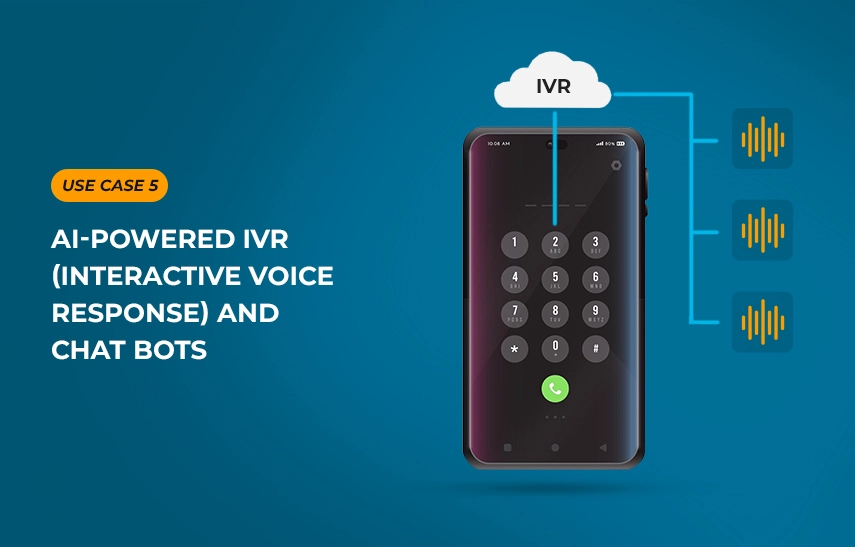 The human touch is important in handling customer requests, but a significant amount of inbound calls and chat sessions can be handled without human agents and at no loss of service quality. Unlike traditional IVR menus, AI IVR is a more versatile Virtual Assistant that can understand natural language, identify the caller, do sentiment analysis, answer common questions, and route calls without the caller having to listen to a long list of options. While an AI-powered chatbot can respond quickly and free up your in-house agents from managing time-consuming chat sessions.
This reduces call volume, shortens hold times, and frees staff for complex cases.
Typical applications:
- Booking new trips
- Trip status inquiries and modifications
- Will call activation
- Appointment reminders
- Multilingual support with call logging
- Call routing for urgent issues
Be Ready to Embrace the AI Era
88% of organizations reported using AI in at least one business function in 2025, with many beginning to scale AI beyond pilots. If you're not using AI yet, you risk falling behind the competition. So consider targeted deployment of these AI use strategies in medical transportation to extract value from this groundbreaking technology.
Request a RouteGenie demo to test its detailed reporting, and advanced routing and scheduling algorithms.
About the author


As RouteGenie's Marketing Director, Yurii gained deep knowledge in the NEMT industry. He is an expert in marketing, leveraging all channels to build RouteGenie's brand and ensure NEMT providers have access to powerful NEMT software that can boost their growth. Yurii shares his knowledge by writing content on marketing and healthcare topics, including medical transportation, home care, and medical billing.