Why Scalable Software Matters in Medical Transportation
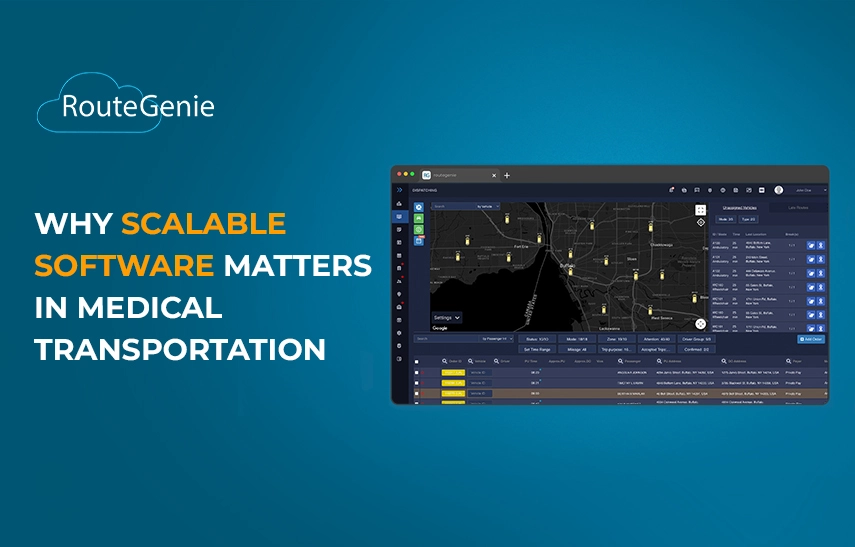
Every growing business reaches a point when the original systems (that once appeared sophisticated and cutting-edge) can no longer keep up. The solution to this bottleneck is scalable software, a system designed to handle the growing amount of work, such as more users, data, or transactions, without compromising performance or user experience.
Contents:
- Introduction: What Is Scalable Software?
- Scalability Lessons from Proven Software Platforms
- What Medical Transportation Software Needs to Scale With You
- Can You Afford to Trade Software Scalability for Simplicity?
- Case Study: How RouteGenie Scaled RideYourWay's Operations
- Turn NEMT Software Scalability Into a Competitive Advantage
Introduction: What Is Scalable Software?
In the context of medical transportation software, scalability means the seamless ability of a platform to expand alongside the growing fleet, a higher number of dispatchers and drivers, increased passenger load, and more complex compliance requirements. This growth should happen without jeopardizing performance, data security, or manual inputs.
Given that NEMT failures lead to real health consequences for the passengers, scalability is more than a convenience; it's a necessity. This article will explain what scalable non-emergency medical transportation software looks like, how it behaves under pressure, and why it is the foundation if you want to grow your NEMT business sustainably.
Scalability Lessons from Proven Software Platforms
Most business owners are already familiar with scalable platforms without realizing it. Let’s explore the so-called “gold standards” of software that illustrate equally impressive results when used by mom-and-pop shops or large corporations.
Accounting Software: QuickBooks
Basic versions of QuickBooks can serve freelancers or other small-scale operations with simple invoicing. However, when growth calls for new capabilities, the system powers up. The “scaled” tiers support employee payroll, real-time inventory, multicurrency billing, project-based accounting, and tax code compliance across jurisdictions.
CRMs: HubSpot and Salesforce
The era of Excel client databases is over. A solo entrepreneur can benefit greatly from switching to a modern CRM (customer relationship management) system like HubSpot or Salesforce. HubSpot’s free tier allows logging leads and emails. But as the business grows, that same CRM expands. The added functionality may include contact scoring, multi-stage deal pipelines, email sequences, live chat, analytics dashboards, and role-based permissions.
Out of these two examples, Salesforce goes even further, offering multi-org support, industry-specific modules, custom workflow automation, and massive integration potential via its AppExchange.
Email Marketing Platforms: Mailchimp
As for email marketing solutions, early-stage companies love Mailchimp because of its simplicity and intuitive campaign builder, but its true value is in the ability to scale. The platform remains smooth on both slow days and during major promotional surges, plus seamlessly goes from one person's newsletter into a multinational brand managing dozens of segmented subscriber lists.
AWS Cloud Hosting: The Backbone of Scalable Software Solutions
To fully explain how the aforementioned SaaS platforms ensure scalability, we cannot help but mention their shared backbone. For software to be called truly scalable, it must be built upon a scalable infrastructure. One of the most reliable service providers within this niche is Amazon Web Services (AWS). AWS dynamically allocates resources based on real-time demand, especially during peak service hours or periods of increased demand.
Mainstream software success is not just inspiring; it’s instructive. Now, let’s examine what software scalability looks like specifically for medical transportation providers.
What Medical Transportation Software Needs to Scale With You
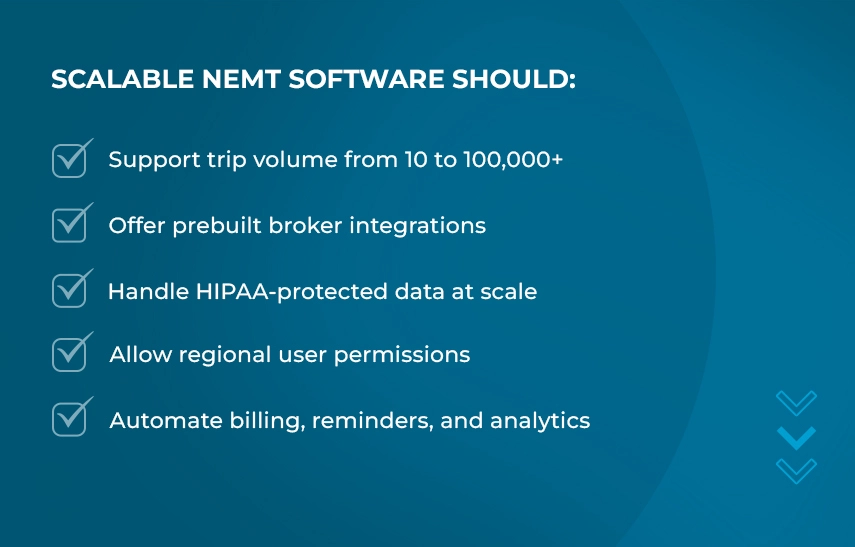 All of our previous examples demonstrate a single truth: scalability must be built in from the beginning. It’s not an upgrade; it’s an architecture. This is especially true for NEMT software, but the stakes can be much higher because passengers’ well-being is at stake. If medical transportation software underperforms under pressure, people will miss their life-saving appointments like dialysis, chemo, physical therapy, or psychiatric care. Here are the most crucial qualities that adaptable NEMT software must possess:
-
Configurable Features for When You’re Ready
The lifecycle of a non-emergency medical transportation company is quite predictable, and so are its software needs. If a small operator is just starting an NEMT business with a single van, there’s a lower need for credentialing automation or dynamic routing at first. But as the number of drivers grows, fleets run not 1 but 10 vans across a large service area, and compliance risks compound; these features become essential.
Flexible medical transportation software platforms like RouteGenie offer a suite of functions that are required to run the most basic operations, as well as high-volume NEMT fleets that work with all sorts of customers.
The software has dispatching, billing, HR credentialing, client communication and relationship module, fleet management, compliance, and eligibility verification functionality. In the case of RouteGenie, all of these features are available from the very first trip and allow for feature configuration to accommodate the company's specific needs:
- You might not be working private pay contracts at the moment, but if you ever do, there won't arise a need to manually process trip requests and billing; a website booking tool for trip requests is at your disposal.
- If you decide to work with facilities, pitch to them your competitive benefit of having a separate facility portal to have more visibility and control over trips.
- If no-shows are not an issue at the moment, you should have the ability to keep them at bay even when the trip load multiplies via automatic text and call reminders.
- Moreover, the medical transportation provider can make strategic growth decisions relying on deep analytical data gathered by the software.
-
Reliable Performance Under Any Load
A smaller NEMT provider can get by with simplified software or even manual routing with Google Maps and scheduling with Excel sheets. But what happens when the service expands across counties or if the company wins a Medicaid contract covering an entire state? That’s right, basic software that used to lag under 10 trips per day won’t survive when the volume scales tenfold or even thousandfold.
Adaptable platforms must support flexible trip volumes, from the very lowest to high-concurrency environments. RouteGenie, for example, is hosted on AWS servers and undergoes regular stress testing. This architecture ensures uninterrupted access even during regional surges or broker system delays. In fact, as of 2025, RouteGenie’s monthly trip volume has reached 1 million.
-
Unlimited Compliance Adaptability
Scaling in NEMT often involves crossing state lines. This implies that new service geographies have their own Medicaid compliance rules and NEMT brokers, different mileage reimbursement rates, specific provider credentialing standards, and unique documentation requirements. Overlooking these new requirements can result in high fines or even denial of service by the local authorities.
Therefore, scalable software must adjust for this variability. It should include location-aware compliance settings, broad broker API integration, dynamic form fields, and permission tiers that adjust as organizations grow geographically. As a result, operators in New York can use the same system as those in Texas or California; no manual workarounds are needed.
-
High-Volume Data Handling and API Compatibility
Growth means processing more data: higher volumes of passengers’ protected health information (PHI), more complex schedules, trip records, audit logs, and payment ledgers. To ensure HIPAA compliance, growth-ready NEMT software must manage these securely and efficiently while enabling seamless API communication with third parties and tools: brokers, MCOs, clearinghouses, CRMs, accounting platforms, and fleet management systems.
The best systems provide high-throughput APIs and prebuilt broker integrations (RouteGenie supports over 10 nationwide broker APIs) to automate claims, manage denials, sync eligibility, and report trip outcomes. This happens without user intervention and manual entry, preventing billing denials.
-
Flexible Role and Region Access Control
Simplicity is the key in any software, but it cannot come at the price of operational security and disruption of procedures. Software must offer granular permissions: dispatchers should only see their region, fleet managers should only access the vehicles they control, and drivers should get access to PHI only to the extent they need to perform their duties. Scalable systems allow fine-tuned control over who sees what and from where.
Can You Afford to Trade Software Scalability for Simplicity?
Until a medical transportation company reaches a certain volume of trips, it can continue relying on software platforms that offer simplified interfaces and limited functionality. However, once certain red flags start to appear in daily operations, a business owner must make a vital decision: stick to an underpowered software system and risk operational disruptions and loss of revenue, or consider transitioning to a more robust platform built to scale.
Unfortunately, those entrepreneurs who continue relying on simpler platforms will likely find themselves still in compliance but paralyzed in terms of growth. To make sure that you transition at the right time, here are the most common scenarios that require an immediate switch to truly scalable medical transportation software:
When to Upgrade: 6 Signs You’ve Outgrown Basic Software
- Growing your fleet: The introduction of new vehicles to your fleet increases vehicle maintenance complexity, which needs precise tracking.
- Expanding across county or state lines: This geographical expansion introduces new compliance rules, rate tables, and broker systems.
- Winning large contracts: Volume surges require instant onboarding of drivers, dispatchers, and passengers, as well as new workflow processes.
- Adding new services: Stretcher transportation, bariatric transport, or door-through-door support is a new level of NEMT service. Each brings new data points and workflow logic.
- Onboarding facility clients: Managing standing orders from dialysis centers, nursing homes, or outpatient clinics demands bulk trip scheduling and customized billing logic.
- Increased audit exposure: Larger providers face more broker scrutiny that actually originates from state MCOs (Managed Care Organizations). Software must provide and collect timestamped logs, driver verification, GPS traces, and other compliance data. These capabilities build broker trust and make you the go-to provider.
Failing to anticipate these shifts in search of a simple solution can result in compliance violations, late payments, lost contracts, and operational paralysis.
Case Study: How RouteGenie Scaled RideYourWay's Operations
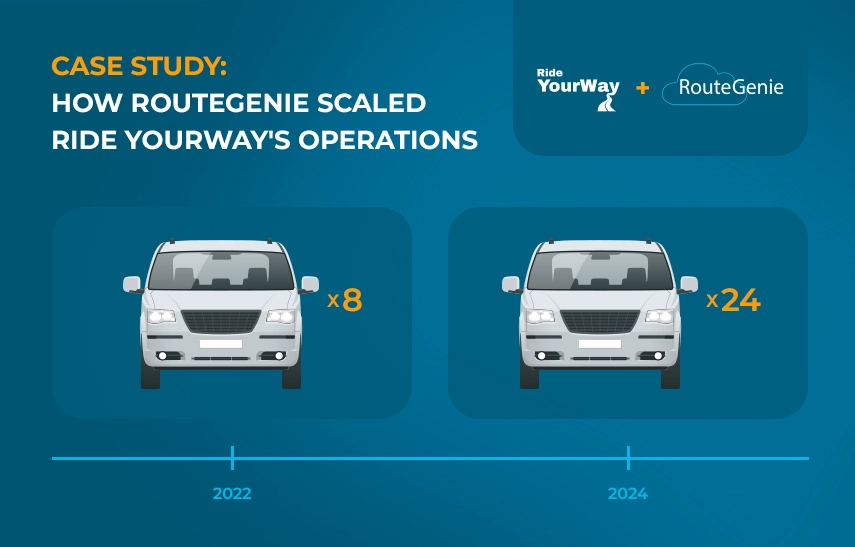 RouteGenie’s scalability played a decisive role in the transformation of RideYourWay’s business model from a volume-based provider to a high-efficiency and value-based one. The clearest benefit was an automated ModivCare API integration. Previously, RideYourWay had to operate manually and relied on limited data.
By onboarding with RouteGenie, they enabled an automatic flow of trip intake, status updates, and billing timestamps through API. This eliminated data silos and human bottlenecks. The resulting efficiency improvement allowed the company to handle more volume without adding dispatch headcount. They went from 8 to 24 vehicles in just two years (2022-2024), and software-wise, did not feel the pain of added trip volumes and administrative complexity. 80-90% of their 1 million annual miles are managed through the RouteGenie platform without a loss in dispatch accuracy, billing compliance, or trip timeliness.
Turn NEMT Software Scalability Into a Competitive Advantage
Every medical transport company wants to grow. But growth without scalable systems doesn't lead to progress; it leads to chaos and non-compliance. Providers can attempt to win new contracts and capture market share by bringing new vehicles in, but brokers and MCOs will definitely inquire whether this quantitative growth is supported by a trusted software platform that brings competitive advantages:
- Faster contract fulfillment
- Fewer denied claims
- Lower administrative overhead
- Superior audit performance
- Flexible market pivoting
- Data-driven decision-making
The healthcare industry is complex and requires powerful tools. When the time comes for your business to evolve, your software platform should scale to accommodate the expanding fleet, adjust to the evolving compliance landscape, and meet shifting market demands.
Scalable NEMT platforms like RouteGenie are built with qualitative growth in mind to support your operation from the first trip to the millionth, without compromising performance. The question isn't whether you'll grow; it's whether your software will let you
About the author


As RouteGenie's Marketing Director, Yurii gained deep knowledge in the NEMT industry. He is an expert in marketing, leveraging all channels to build RouteGenie's brand and ensure NEMT providers have access to powerful NEMT software that can boost their growth. Yurii shares his knowledge by writing content on marketing and healthcare topics, including medical transportation, home care, and medical billing.