
Does Medicare Cover Medical Transportation?
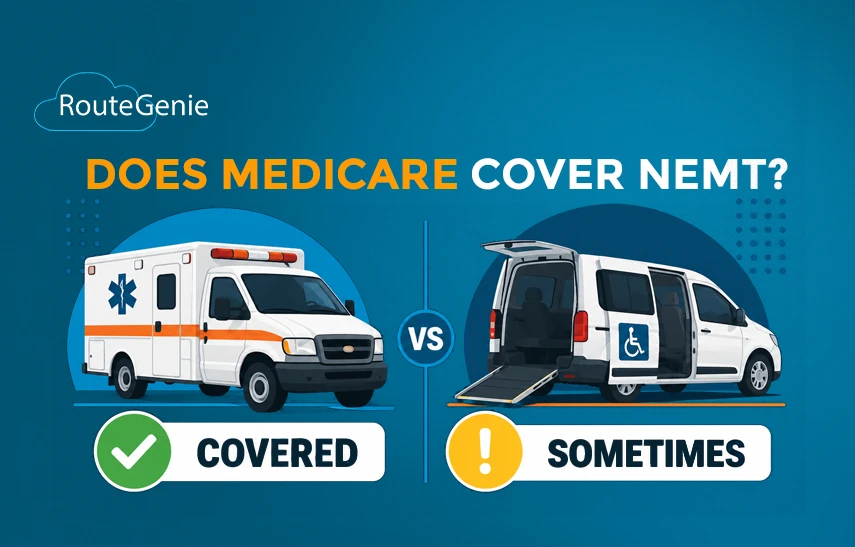
As per the latest data from KFF, more than 35 million people are enrolled in Medicare Advantage in 2026 (over half of everyone eligible). Many often choose this private plan for the extra benefits it advertises. Transportation is one of those benefits that a lot of members assume comes with the card, but the reality is more nuanced. In most individual plans, the coverage is absent, and the share of plans offering it keeps falling.
In this article, we will clarify the details of Medicare coverage of medical transportation services. For NEMT providers, brokers, and the health plans that fund these trips, the gap between what members expect from their plan and what it actually covers is where a lot of demand sits.
Contents:
- What “Original” Medicare Covers
- How Medicare Advantage Changes the Answer
- Special Needs Plans Are Where the Benefit Lives
- How Do Medicare Advantage NEMT Benefits Work?
- Conclusion
What “Original” Medicare Covers
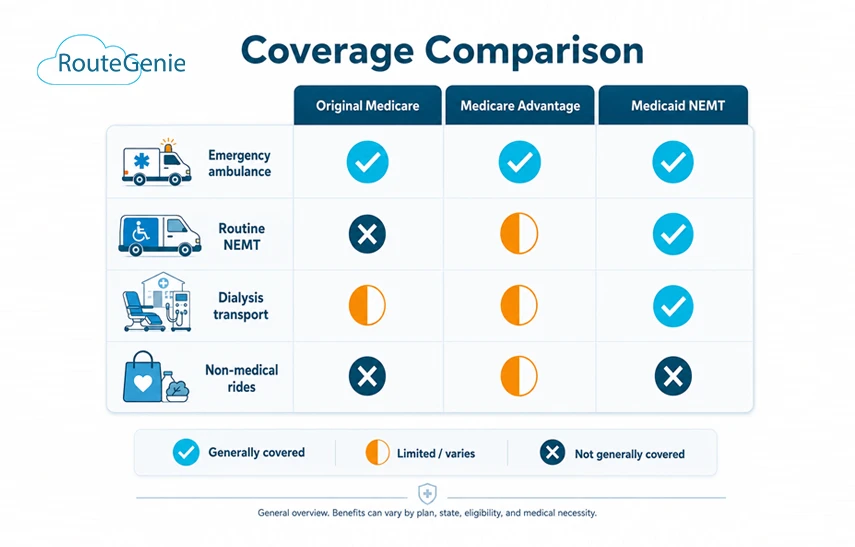
Original Medicare includes Part A (hospital) and Part B (medical). Transportation is only involved in Part B. The latter covers ambulance service when the trip is medically necessary; in other words, if getting to the hospital in any other way could put the patient at risk. When the trip qualifies, Medicare pays 80 percent of the approved amount after the Part B deductible, and the patient covers the rest. In non-emergency situations, ambulance transport can be covered in narrow cases, but only with a doctor's written order, i.e., a bed-confined dialysis patient.
What Original Medicare won't pay for is other types of healthcare trips like a scheduled ride to a clinic, a dialysis center, or a pharmacy in a wheelchair van or sedan. This is the domain of non-emergency medical transportation, or NEMT.
How Medicare Advantage Changes the Answer
If Original Medicare leaves NEMT out, its private alternative Medicare Advantage (Part C) takes a different approach. Funded through rebate dollars from Medicare, these plans cover everything Original Medicare does and can add extras, transportation among them. The 2018 Bipartisan Budget Act and CHRONIC Care Act added separate flexibility for chronically ill members through Special Supplemental Benefits for the Chronically Ill (SSBCI), which can include non-medical rides to the grocery store or pharmacy when CMS criteria are met.
So the real answer is that Medicare does cover NEMT, but only if you're in a Medicare Advantage plan that chose to offer it. Unfortunately, fewer plans are choosing to. In 2026, 24 percent of individual Medicare Advantage plans offer a transportation benefit for medical needs, down from 30 percent in 2025 and 36 percent in 2024.
The drop among Special Needs Plans was steeper, from 81 percent to 67 percent in a single year. Rides cost a lot to administer and are hard to forecast, so they're an early target when margins tighten.
Special Needs Plans Are Where the Benefit Lives
If we wanted to be more specific, the Medicare Advantage NEMT benefit is mostly concentrated in a Special Needs Plan. These plans serve the people most likely to miss care without a ride. SNPs restrict enrollment to three beneficiary groups:
- Dual-eligible SNPs (D-SNPs): people enrolled in both Medicare and Medicaid
- Chronic condition SNPs (C-SNPs): people with specific qualifying conditions
- Institutional SNPs (I-SNPs): people requiring nursing-home-level care
The latest trend is that the SNP enrollment keeps climbing, from 13 percent of Medicare Advantage enrollees in 2018 to 23 percent in 2026. In fact, SNPs drove about 85 percent of net Medicare Advantage growth between 2025 and 2026. This upward pressure would suggest that more people who opt for Medicare Advantage can expect to get access to the NEMT benefit, but for now this is not a certainty. The SNP growth is somewhat offset by the shrinking of the transportation benefits within these plans.
How Do Medicare Advantage NEMT Benefits Work?
A Medicare Advantage non-emergency transportation benefit isn't an open tab for fetching an Uber to the clinic or to the pharmacy. Plans cap it at a set number of one-way trips a year, and most count each leg separately, so a round trip is two trips against the allowance. D-SNPs tend to be more generous than individual plans.
It’s worth noting that the Medicare Advantage Plans like Humana, Aetna, United Healthcare, and Anthem rarely run the rides. Instead, they contract with NEMT brokers that handle scheduling, eligibility checks, and dispatch out to NEMT providers (ModivCare, MTM Health, SafeRide Health). For a provider chasing this work, that's the practical reality: you don't bill the plan; you contract with the broker, meet its credentialing rules, and submit clean claims through its system.
Conclusion
Original Medicare doesn't cover NEMT, some Medicare Advantage plans do, and Special Needs Plans are now where most of that coverage sits. Integration with the right brokers through reliable medical transportation software like RouteGenie matters more than before, because the work is funneling through fewer doors. For health plans, the same trend cuts the other way: as transportation becomes a defining SNP benefit, reliable execution turns into a retention and Star-rating issue, not just a line item.
RouteGenie helps providers and health plans manage the scheduling, routing, and billing complexity of running trips across multiple brokers and payers. Request a demo to see for yourself.
About the author


Serhii Taborovskyi is the founder and author of the Automotive Territory YouTube Channel, with 300,000 subscribers and counting. He is an avid automotive enthusiast and a fan of any and all motorized vehicles. Serhii is a visiting author at RouteGenie, sharing his expertise for the benefit of the NEMT community.