
What Is an Ambulette?
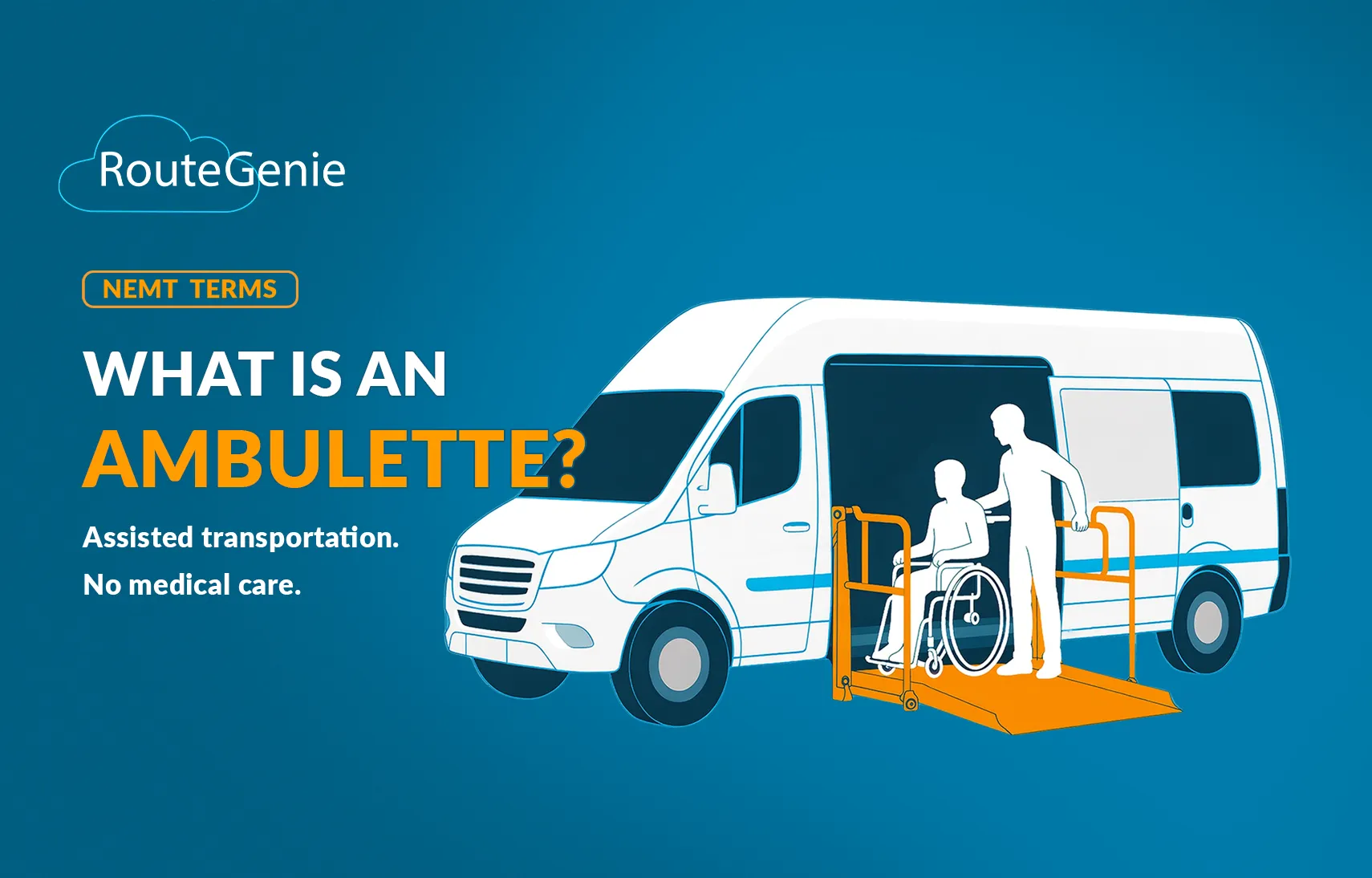
An ambulette is a non-emergency vehicle, usually a wheelchair van and sometimes stretcher-equipped, for people who can't safely get to medical care by car or public transit. No medical treatment happens on board, but in New York the crew has to give the rider hands-on help from home to the appointment.
Medicaid pays for ambulette rides when they're medically necessary. Original Medicare doesn't. In 2021, 247 providers billed New York Medicaid for ambulette service, and the state paid about $291.8 million for 6.24 million trip legs. The rules below are New York's, where ambulettes are their own Medicaid category.
Contents:
- Ambulette Meaning and What Other States Call It
- Ambulette vs. Ambulance
- What an Ambulette Service Includes
- Who Qualifies for Ambulette Transportation
- Ambulette Documentation and Audits
Ambulette Meaning and What Other States Call It
New York's Medicaid rule defines an ambulette as "a special-purpose vehicle, designed and equipped to provide nonemergency transport" for riders with disabilities, including those in wheelchairs or on stretchers.
Other states use different names. New Jersey licenses a mobility assistance vehicle, and Connecticut's Medicaid rules say invalid coach. On claims, HCPCS A0130 is a non-emergency wheelchair van in North Dakota's manual and a local ambulette trip on New York's code list.
Ambulette vs. Ambulance
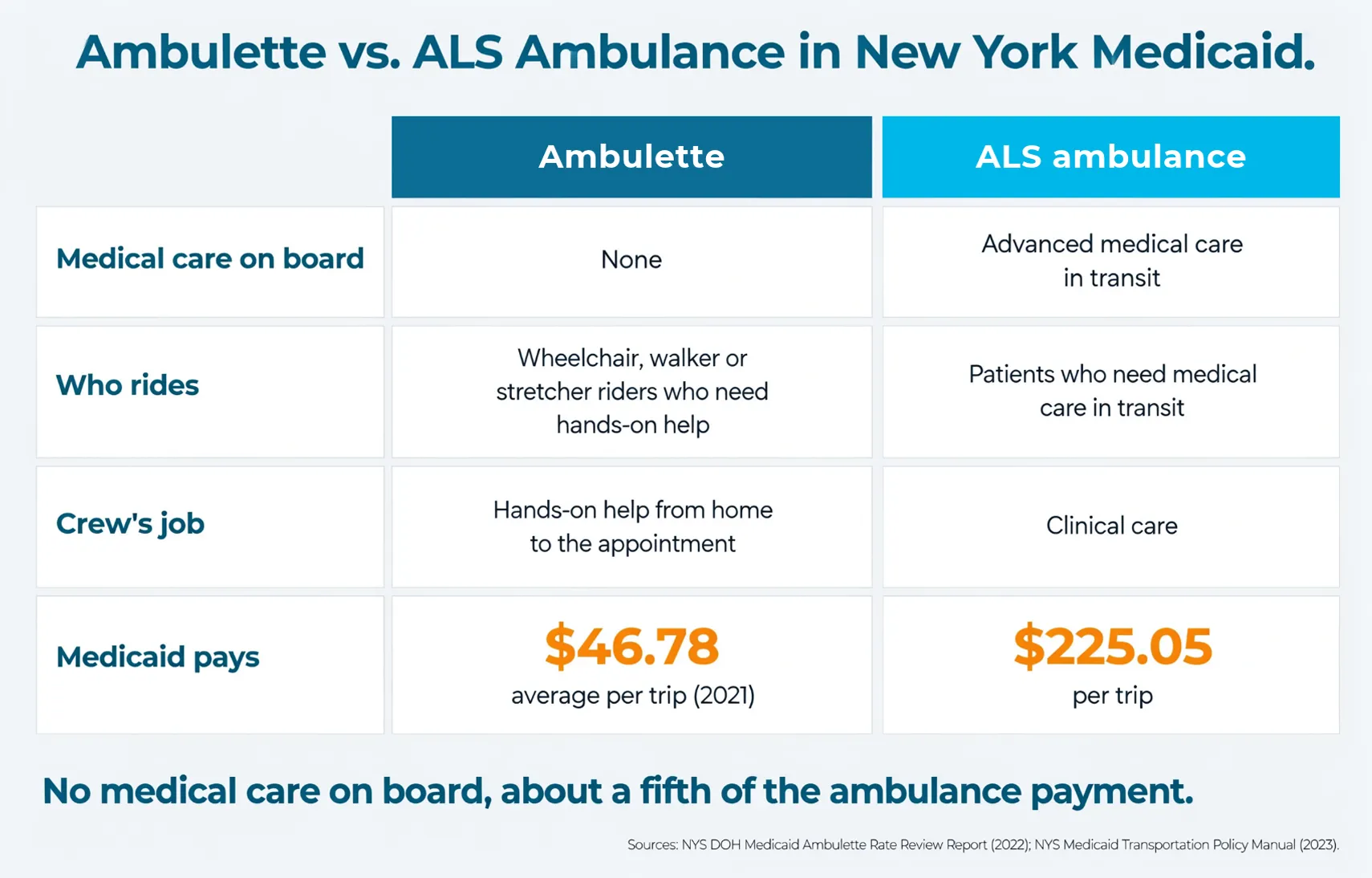 The difference is medical care. An ambulance is equipped to provide it in transit, on emergency calls and scheduled trips alike. An ambulette isn't, and New York's Medicaid manual bars using one as an ambulance.
A stretcher ambulette can only carry someone who is confined to bed, can't sit in a wheelchair and doesn't need medical monitoring on the way. Stretcher riders can bring oxygen they manage themselves. But the vehicle can't be equipped with oxygen, and the crew can't help with it.
So a rider who needs monitoring goes by ambulance, and a rider who needs hands-on help but no medical care goes by ambulette. Taxi and livery trips are curb to curb, with no hands-on help.
New York Medicaid paid an average of $46.78 per ambulette trip in 2021, according to the state's rate review. The same review puts an advanced life support ambulance trip at $225.05, almost five times as much.
What an Ambulette Service Includes
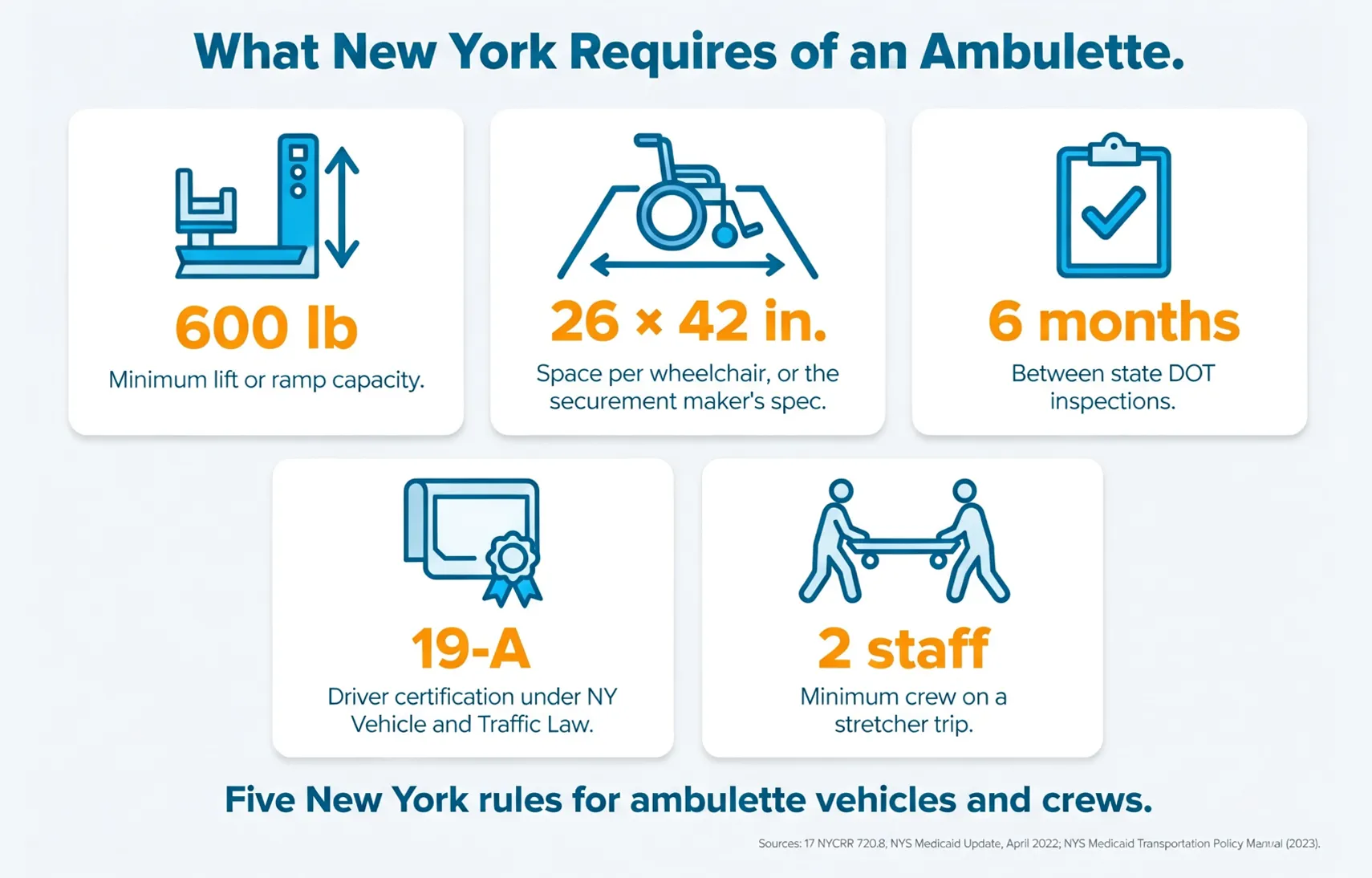
Personal assistance defines the service. New York's rule defines it as physical help with walking, stairs, ramps, curbs and doors, and with getting into the vehicle. The state's manual treats it as door-through-door help, with no limit on stairs or floors and no extra pay for it. Stretcher trips need at least two staff: a driver and an assistant riding in back.
New York ambulettes need a state DOT inspection every six months, and their drivers need Article 19-A certification. Under 17 NYCRR 720.8, a lift or ramp must handle at least 600 pounds, and each wheelchair position needs at least 26 by 42 inches or the space the securement maker specifies. The van also needs fastening devices made for wheelchair securement.
Who Qualifies for Ambulette Transportation
Federal rules require state Medicaid programs to ensure necessary transportation to and from providers. Private-pay riders need no payer approval.
Medicaid Eligibility for Ambulette Rides
Under New York's rule, Medicaid covers an ambulette when one of these applies:
- The rider uses a wheelchair, walker or crutches and can't use a taxi, livery service, bus or private vehicle.
- Dialysis, chemotherapy or radiation leaves an otherwise ambulatory rider unable to use a taxi or bus.
- The rider has to travel lying down, and the ambulette can carry a stretcher.
- Another physical or mental condition requires personal assistance, and the practitioner certifies it.
The rider's medical practitioner decides the level of transport, and MAS, the state's broker, approves each trip in advance. Transportation providers can't request that approval themselves.
Does Medicare Cover Ambulette Services?
Original Medicare doesn't. CMS's claims manual says Medicare "does not provide any coverage at all" for non-ambulance transportation, ambulettes included.
Among Medicare Advantage plans, 24% of individual plans offer transportation for medical needs in 2026, down from 30%, as do 67% of special needs plans.
Ambulette Documentation and Audits
New York's Office of the Medicaid Inspector General (OMIG) has an audit protocol, for service dates through July 2026, that disallows a claim missing any of 11 documentation items on either leg, from pickup time to the driver's license number. Dispatch sheets and manifests don't count as proof on their own. A claim also fails if a driver on payroll more than 10 days is missing from the carrier's DMV 19-A report that day. Loaded mileage is billed to the tenth of a mile, and rounding up can be treated as fraud. The manual also requires each trip's GPS trail to reach the broker, barring a state exemption, and six years of records.
If you run ambulettes, the job is matching each rider to the right vehicle and keeping a complete, GPS-backed record for every leg. RouteGenie's dispatch software is built for both.
About the author


Serhii Taborovskyi is the founder and author of the Automotive Territory YouTube Channel, with 300,000 subscribers and counting. He is an avid automotive enthusiast and a fan of any and all motorized vehicles. Serhii is a visiting author at RouteGenie, sharing his expertise for the benefit of the NEMT community.