
Patient Transportation Software: Why Health Systems Need One Connected Platform
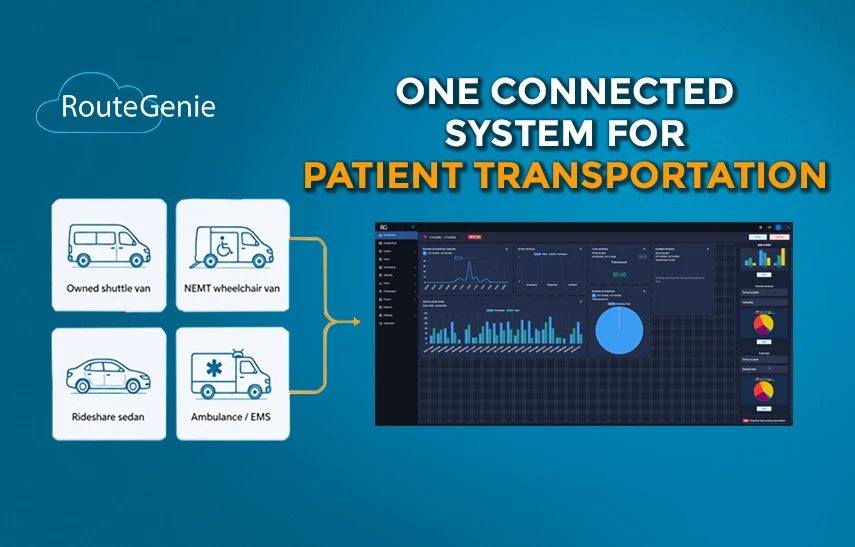
A patient sits in a hospital gown, discharge papers in hand, waiting on a ride nobody has confirmed. Down the hall, another patient is going home by ambulance for a trip a wheelchair van could have handled at a tenth of the price. Both show up as "transportation" on the operations dashboard. But most health systems move patients through four or five disconnected systems: owned shuttles, contracted NEMT vendors, EMS, and a patchwork of rideshare, vouchers, and volunteer drivers. Nobody sees the whole thing.
That fragmentation is expensive, and not only in dollars. Transportation is one of the most common reasons patients miss care, and when a ride falls through, the health system absorbs the fallout: a held bed, a missed appointment, a readmission better coordination might have prevented. Here's how health systems can pull every patient ride into one place, and why one interconnected system is a winner.
The Ways Health Systems Move Patients Today
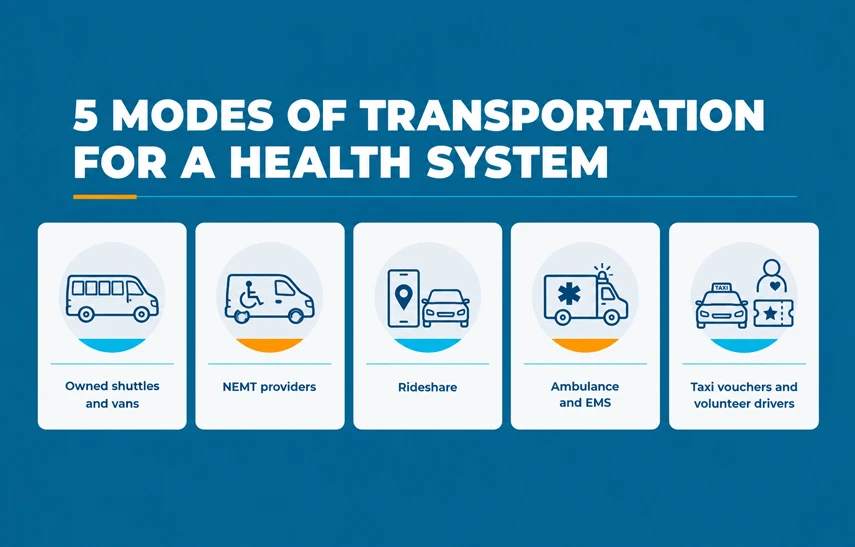
Most health systems run some mix of five channels, each in a different tool, and often at cross purposes:
- Owned shuttles and vans for campus transfers, clinic runs, and select discharges
- Contracted NEMT providers for ambulatory, wheelchair, and stretcher trips
- Rideshare partners like Uber Health and Lyft Healthcare for ambulatory, same-day rides
- Ambulance and EMS for true emergencies, and often as the fallback when nothing else is available
- Taxi vouchers and volunteer drivers, usually managed on spreadsheets
The channels keep multiplying. In 2026, Uber Health says more than 4,000 healthcare organizations now use its platform, up from around 1,000 in 2020. Lyft Healthcare runs in 21 states. Each vendor brings its own portal and its own reporting. The Admissions and Discharge Desk still ends up dealing with the phone tag.
What Fragmented Patient Transportation Really Costs
Overspending on the Wrong Transportation Mode
The most expensive habit in patient transportation is reaching for an ambulance when something smaller would do. Look at the spread. In a recent study, a commercial ground ambulance trip averaged $1,093, and commercial rates run about double what Medicare pays. A Medicaid NEMT trip, by comparison, runs $45 to $60 in most state programs. A rideshare medical trip averages around $25.
So the same patient can cost ten to forty times more depending on which vehicle shows up. When the discharge desk calls whoever answers first, the health system pays for that habit, trip after trip.
And the safety argument for right-sizing is stronger than a lot of operators assume. A 2025 study in the American Journal of Emergency Medicine reviewed one health system's non-ambulance interfacility transports and found no associated adverse outcomes. Separate research shows that patients would actually prefer an alternative way of transport to an ambulance ride.
The Cost of Running Separate Systems
The second cost is the one operations leaders feel daily. A patient who's medically cleared to go home but has no confirmed ride keeps occupying an inpatient bed, which delays the discharge and keeps that bed from turning over for the next admission. Hospital care runs about $3,100 per inpatient day, by KFF's analysis of American Hospital Association data, so every extra day spent waiting on a ride is money spent and a bed the hospital can't reuse.
The downstream numbers are just as real. CDC data from 2022 found 5.7% of US adults lacked reliable transportation in the past year. A 2022 Urban Institute survey found 5% of adults skipped care because of it, rising to 14% among low-income adults and 17% among adults with a disability. CMS estimates transportation barriers cause a quarter or more of missed clinic appointments. Every missed appointment is a delayed diagnosis and a lost billable visit. Plenty of those patients turn up in the ED later, sicker.
What Patient Transportation Software Does
Patient transportation software gives a health system one intake for every trip, whatever the mode. Owned fleet, contracted NEMT, and rideshare rides sit on one live map. One patient record travels with the trip. One set of reports covers every channel and every vendor.
That's plumbing, and it isn't glamorous. But the plumbing is what unlocks the outcomes operations teams and the CFO actually care about.
Matching Each Trip to the Right Mode
Start with mode matching. An ambulatory patient with a phone can take an ambulatory NEMT ride or a rideshare. A wheelchair user needs an NEMT van with a lift. Stretcher patients need a full-size van, and a patient who needs monitoring in transit needs an ambulance. Right now, a lot of health systems make that call based on whichever vendor picks up. Software makes it based on mobility need, urgency, distance, and cost, while flagging trips where the ride mode does not match the patient requirements.
It also flags the trips where rideshare doesn't belong. Uber Health and Lyft handle ambulatory patients well. They're no substitute for a wheelchair van, and they're the wrong call when a patient needs door-through-door help. Getting that decision right on every trip is where the overspending disappears.
Faster Hospital Discharge Transportation
Ride uncertainty holds beds. When the discharge team can book a ride, watch the ETA, and confirm the pickup in one workflow, patients actually leave. Ride Your Way, a RouteGenie customer, reported discharge coordination dropping from a four-to-eight-hour window to on-demand after moving trip management onto a single platform. For an ED boarding patients at $1,856 a day, that reclaimed capacity is the whole point. A facility portal with live status is what makes it work on the discharge desk side.
Fewer No-Shows and Better Appointment Adherence
The evidence here is the strongest in the piece. A 2025 CJASN study of 115,982 in-center hemodialysis patients found that those without private transportation missed more treatments and died at higher rates. A 2023 JNCI study tied transportation barriers to more ER visits and higher mortality among people with a cancer history. These outcomes can be changed, and cutting no-shows helps both the clinical numbers and the revenue line.
Rideshare on its own won't do it, though. A JAMA Internal Medicine trial found that simply offering rideshare didn't reduce primary-care no-shows, with uptake at just 26%. What moves the needle is coordination: reminders, the right vehicle, and a pickup that actually happens. That's the software's job, not the ride app's.

What to Look for in Patient Transportation Software
A short buyer checklist:
- Multi-modal dispatch. NEMT, fleet, and rideshare in one view. A platform that manages only one channel doesn't solve the fragmentation problem.
- Broker integrations. For any trip billed through Medicaid or a health plan, the platform should connect to the broker's API rather than force manual re-entry.
- EHR integration. Epic and Cerner integrations reduce re-keying and let discharge planners book from the record they already work in. Ask about the current install base, not just whether integration exists on paper.
- HIPAA and a signed BAA. Any vendor handling patient data needs to sign a Business Associate Agreement.
- Real-time tracking and audit-grade reporting. Live ETAs for discharge desks. Time-stamped trip records for compliance. Cost and on-time performance broken down by mode, so the system can see where the overspending sits.
- Multi-site scale. Health systems with more than one campus need campus-level rules and consolidated reporting.
RouteGenie is built around this pattern. One platform for owned fleet, NEMT partners, and rideshare, with the reporting layer a health system operations team needs to see all of it.
Conclusion
Patient transportation drives discharge throughput and appointment adherence, and it moves real money. Health systems own the fallout when it fails. Running it across four disconnected systems doesn't hold up at scale. Running it in one place does, and the outcome data backs that up. See RouteGenie in action.
About the author


Yurii Martynov is the Marketing Director at RouteGenie, the leading software platform for medical transportation. With years of experience in the NEMT industry, Yurii leads brand strategy, demand generation, and go-to-market efforts that help transportation providers and brokers discover the tools they need to grow. Working closely with NEMT providers, brokers, and healthcare organizations has given him a deep understanding of the challenges facing the industry. He writes about NEMT operations, healthcare transportation trends, and the evolving role of technology in connecting patients to care.